- Empty cart.
- Continue Shopping

Receiving a Bulk School Lock Order: Inspection Before Installation
- Posted on
marketang
- Categories: Locks for School Lockers
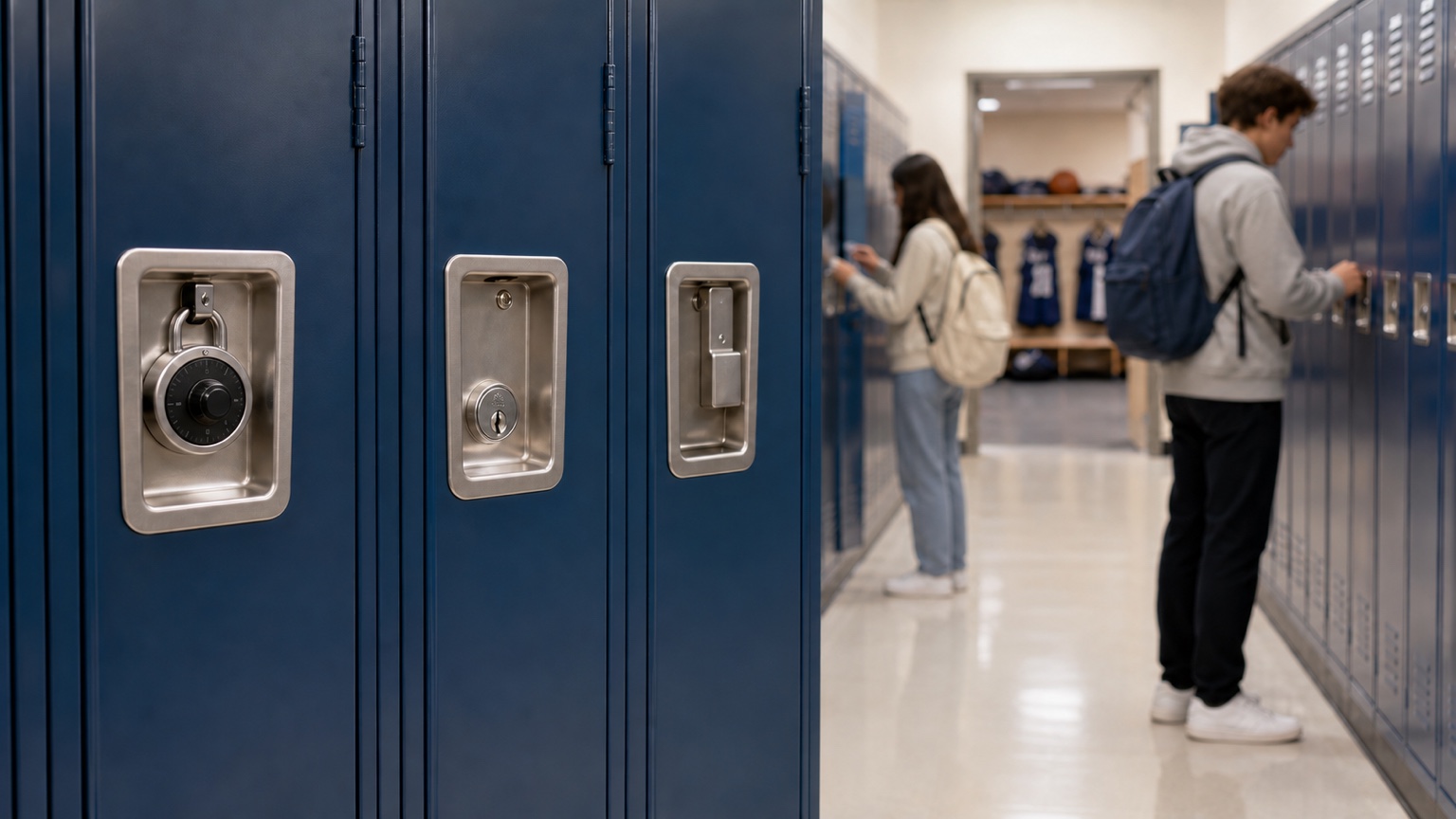
When a bulk school lock order arrives, check the delivered models, quantities, accessories, and documentation against the approved order before distributing the locks. Then arrange an authorized operation and fit check appropriate to each locker application. The workflow below is a suggested receiving process for school teams; the actual purchase terms and manufacturer instructions remain the controlling documents.
Keep the approved order beside the shipment
A supplier’s delivery label and the school’s original request may not contain the same level of detail. Use the accepted order confirmation or purchase schedule as the receiving reference. Keep cartons grouped by their stated model while the contents are checked.
For a mixed project, separate portable padlocks from built-in combination locks and built-in keyed locks. Then distinguish full model codes, shackle variants, handing, dial options, and other specified differences. Do not combine items merely because the front faces look similar.
If the project specification is still being assembled, the pre-quote checklist covers the earlier purchasing stage. This receiving check begins after the order has been agreed.
Record what arrived
| Check | Receiving record |
|---|---|
| Lock identity | Complete model and option code compared with the order |
| Quantity | Expected, received, and any difference |
| Condition | Visible damage or packaging concerns |
| Separate items | Ordered accessories, keys, or extension sets received |
| Documents | Applicable instructions and any specified system records |
| Disposition | Accepted, held for clarification, or awaiting an operation check |
Record facts rather than conclusions. “Model code differs from confirmation” is more useful than “wrong locks.” Include a non-sensitive photograph where it helps explain the discrepancy. Keep packaging and order references available while the supplier reviews an exception.
Check accessories against the order
Do not assume a control key, extension set, or other accessory is included because it appears in a product photograph. Check the agreed line items and quantities. If an installation depends on a specified accessory that has not arrived, keep the affected group identified until the issue is resolved.
Likewise, do not silently substitute another lock from stock. A temporary replacement still needs physical and administrative approval for its intended use. The school locker lock types guide explains why similar-looking products can serve different applications.
Arrange an authorized operation and fit check
Choose the check method with the responsible facilities staff and installer. A representative locker should match the actual application being accepted, including the door preparation and mechanism. Different locker groups may require separate checks.
Use the normal operating instructions for that model and the authorized credentials. For example, the 1525 is a portable padlock, while a built-in model interacts with the locker’s own hardware. A single generic demonstration does not confirm both applications.
Master Lock provides different student operating videos and separate installation guidance for its locker models. Consult those references instead of assuming one dialing, relocking, or mounting procedure applies to the full shipment. Any installation that requires force, improvised hardware, or unexplained adjustment should be reviewed before the remaining units are installed.
Hand over the accepted inventory
Have the receiving team record which groups are ready for installation or issue and which remain on hold. Confirm who receives the instructions and who is authorized to hold the system information. A receipt for the physical cartons is not the same as a completed facilities handoff.
For combination locks, keep sensitive records separate from open receiving paperwork. The combination-management guide covers access to those records. The maintenance or purchasing log can refer to an inventory identifier without exposing its combination.
Frequently asked questions
Should staff open every box immediately?
Follow the school’s receiving procedure and the supplier’s instructions. Keep model groups and packaging organized while quantities and condition are verified.
Does an intact carton prove that every lock is ready to issue?
No. Packaging condition is one check. Model matching, documentation, and the agreed operation or fit checks are separate steps.
What if a lock’s suffix differs from the order?
Hold that group for clarification. Confirm the difference before installation rather than assuming the suffix only describes appearance.
Should control charts be kept with the packing slips?
Restricted system records should be handed to the authorized custodian. Ordinary receiving paperwork should not become a public copy of the school’s combinations.
Manufacturer references: model-specific operation videos, school installation and support information, and product specifications.